

RIYADH
Federation of Saudi Chambers Chair Abdullah Saleh Kamel said Saudi Arabia has emerged as a leader in several industries, including petrochemicals, machinery and equipment, food and pharmaceuticals, textiles and building materials, among other sectors.
He noted that Saudi products have become strong competitors in global markets, as reflected in growing demand from importers in sisterly and friendly countries and supported by data showing continued growth in non-oil exports.
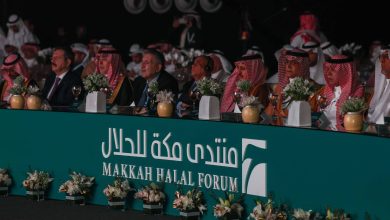
Kamel made the remarks in his opening address at the second edition of the Saudi Industrial Forum 2026, being held from Sept. 14-16 at Jeddah Superdome under the patronage of Prince Khalid bin Faisal bin Abdulaziz, adviser to the Custodian of the Two Holy Mosques and governor of Makkah region. The opening was attended by Prince Saud bin Mishal bin Abdulaziz, deputy governor of Makkah region.
He said the Kingdom’s industrial sector has witnessed significant growth, with the number of industrial establishments rising from about 7,000 at the beginning of the Saudi Vision 2030 era to more than 15,000 today across various economic activities.
He also highlighted the emergence of new sectors that had not previously been licensed, most notably the defense industries. The number of licensed defense companies has now exceeded 347, he said, while domestic and foreign investments have continued to grow, raising the industrial sector’s contribution to gross domestic product to 16%.
Kamel attributed Saudi Arabia’s industrial leadership to the support of the government of the Custodian of the Two Holy Mosques, as well as the Kingdom’s economic strengths and competitive advantages, including the availability of basic materials and the development of the industrial ecosystem through legislation and government enablers that have strengthened the private sector’s competitiveness.
He also cited the Kingdom’s advanced infrastructure and proximity to global markets, alongside ambitious leadership and a private sector that has demonstrated its ability to invest, grow and compete.
Kamel said the Saudi Chambers Federation operates under a strategic partnership model with government entities concerned with industry to advance the Kingdom’s objectives at the domestic and international levels.
He described the forum as a major example of this partnership, saying the federation aims to establish it as a platform for creating opportunities and developing enablers that contribute to decision-making, support partnerships and promote industrial-sector growth in line with the objectives of Saudi Vision 2030.
The chair underscored the growing role of the private sector in the next phase, saying the sector must become more capable of attracting high-value industries to the Kingdom, localizing them and driving innovation and development across various industrial fields.
He also stressed the importance of leveraging artificial intelligence, Fourth Industrial Revolution technologies and other enablers and emerging developments in the sector, with the aim of positioning Saudi Arabia as an industrial powerhouse on the global economic map.
At the conclusion of his remarks, Kamel expressed his appreciation to Prince Saud bin Mishal bin Abdulaziz, deputy governor of Makkah region, for his support for the region’s private sector through the launch of high-impact initiatives and his continued efforts to address challenges and improve procedures, helping make the region attractive to high-value projects and encouraging domestic and foreign investment.
The three-day forum is organized by the Saudi Chambers Federation, represented by its National Industrial Committee, in cooperation with the Jeddah Chamber and in strategic partnership with the Ministry of Industry and Mineral Resources and its affiliated entities, as well as the Makkah Region Development Authority.
The forum features panel discussions and specialized workshops addressing developments and opportunities in the industrial sector and the future of national industries. It will also witness the signing of a number of agreements and memoranda of understanding between government and private-sector entities, as well as educational and research institutions.